Cellares Just Dosed Its First Patients on a Fully Automated CAR-T Line — Here's Why That's a Bigger Deal Than It Sounds
Cellares dosed the first patients with a CAR-T therapy manufactured entirely on its automated Cell Shuttle platform, targeting the manufacturing bottleneck that's kept cell therapy costs high and patient access low for a decade. BMS, Cabaletta Bio, and a fresh $327M Series D suggest this is more than a one-off proof of concept — but the real cost-reduction claims still need commercial-scale proof.
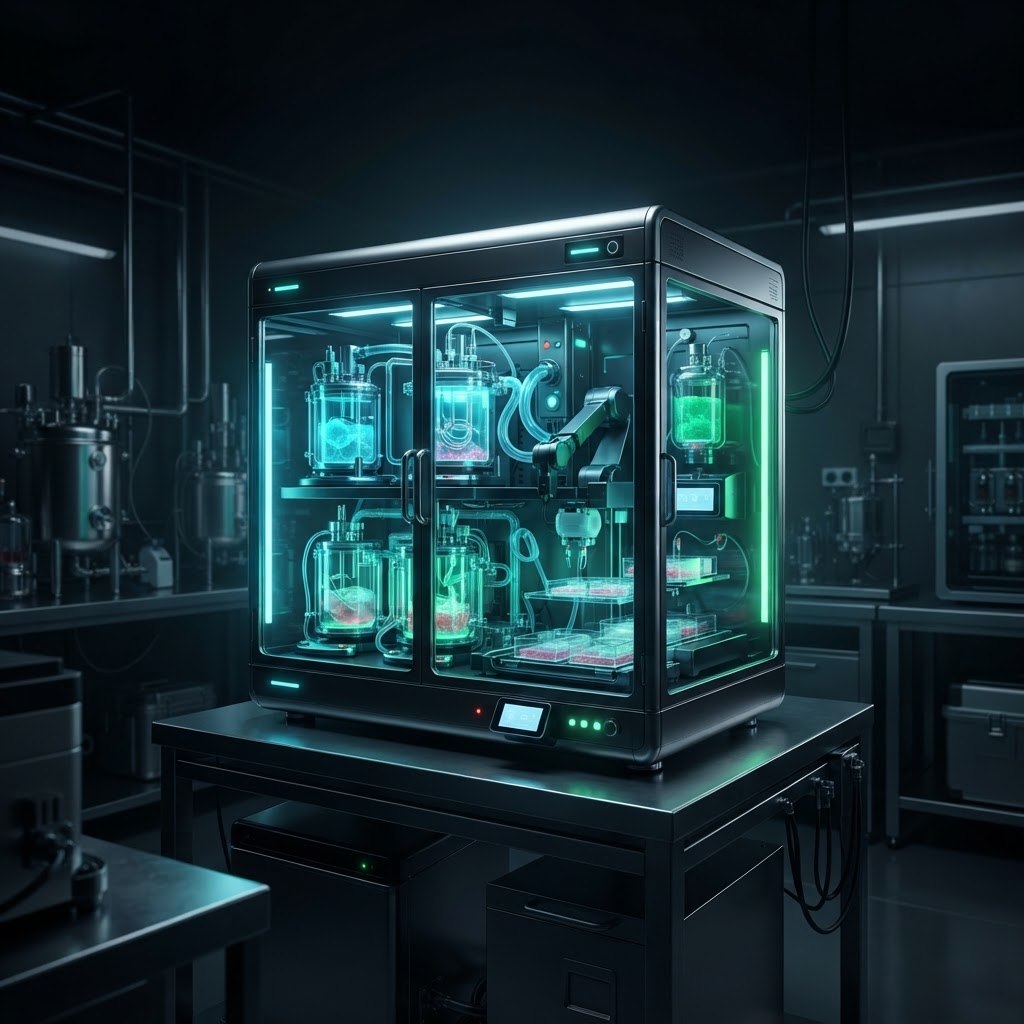
On April 14, 2026, Cellares announced that the first two patients had been dosed with a CAR-T cell therapy manufactured entirely on its automated "Cell Shuttle" platform — a milestone the company is calling a turning point for an industry that has spent a decade struggling to manufacture personalized cell therapies at any real scale.
The therapy in question, rese-cel (resecabtagene autoleucel), belongs to Cabaletta Bio and targets autoimmune disease — rheumatology, neurology, and dermatology indications — rather than cancer. But the significance isn't the specific drug. It's that a fully automated system produced a GMP-compliant autologous cell therapy that met all release specifications and was delivered on time, with no manual manufacturing bottleneck in the loop.
Why manufacturing, not science, has been CAR-T's real constraint
Autologous CAR-T therapy works by extracting a patient's own T-cells, genetically engineering them to recognize and attack disease targets, and infusing them back. The clinical results have been proven for years — this isn't a science problem anymore. The problem has been that the manufacturing process is intensely manual: skilled technicians handling each patient's cells individually, in dedicated clean-room runs, with meaningful failure and dropout rates. That translates into high costs, weeks-long turnaround times, and hard capacity ceilings — a handful of approved CAR-T products serving a small fraction of eligible patients years after approval.
Cellares calls itself an "Integrated Development and Manufacturing Organization" (IDMO) — its Cell Shuttle platform automates the end-to-end manufacturing workflow, and its companion Cell Q system automates quality-control and release testing, the other major manual bottleneck. The company claims its Bridgewater, New Jersey Smart Factory can produce up to 10x more batches than a conventional CDMO with comparable footprint and headcount.
The proof point that matters: it took three years to get here
Cabaletta Bio first partnered with Cellares in 2023 specifically to address the cost and scale problem. The two companies spent three years generating comparability data — benchmarking the automated process against Cabaletta's existing manual process across multiple engineering and process-development runs — before that dataset supported an FDA IND amendment to actually use the Cell Shuttle for clinical manufacturing. That's worth noting because it undercuts any narrative of automation as a plug-and-play swap: getting a regulator comfortable that an automated process produces an equivalent product took years of validation work, even for a company purpose-built to do exactly this.
The companies have since signed a 10-year commercial supply agreement, betting that the validation work pays off at commercial scale.
The bigger signal: this isn't a one-customer story
Cellares' broader traction suggests the industry is making the same bet. Bristol Myers Squibb signed a $380 million worldwide capacity reservation and supply agreement with Cellares in 2024 for CAR-T manufacturing. In June 2026 alone, Cellares grew its Series D to $327 million with a new $50 million investment from Prime Radiant Partners, joined the newly formed American Industrial Alliance focused on U.S. biopharmaceutical manufacturing independence, and was accepted into the FDA's inaugural Manufacturing PreCheck cohort — the only cell therapy platform among seven companies selected nationwide. The Cell Shuttle also holds the FDA's Advanced Manufacturing Technology designation, a first for a cell therapy manufacturing platform.
The skeptical read
This is a genuine infrastructure story, not a hype cycle — cell therapy manufacturing economics have been the industry's most persistent, least glamorous bottleneck, and there's real capital and regulatory momentum (BMS's $380M commitment, the FDA PreCheck designation, the AMT designation) behind the idea that automation can fix it. But two patients dosed is a proof-of-concept, not a demonstrated commercial cost structure. Cellares hasn't published independently verified, apples-to-apples cost-per-batch figures against manual manufacturing, and the real test — sustained commercial-scale output across multiple therapies and indications, at the cost reduction the company is promising — is still ahead. Watch whether the BMS oncology programs and Cabaletta's autoimmune pipeline both scale cleanly on this platform over the next 12-18 months; that's the actual evidence this thesis needs.