Samsung Just Paid $1.8 Billion for a Peptide Factory. Here's What That Tells You About the Market.
Samsung Biologics' all-cash acquisition of PolyPeptide Group — the largest South Korean biopharma deal ever — signals that peptide manufacturing capacity, not discovery, is the binding constraint on the GLP-1 era. Same week, Bachem dropped $615M on a new Swiss facility. The picks-and-shovels play in peptides is accelerating.
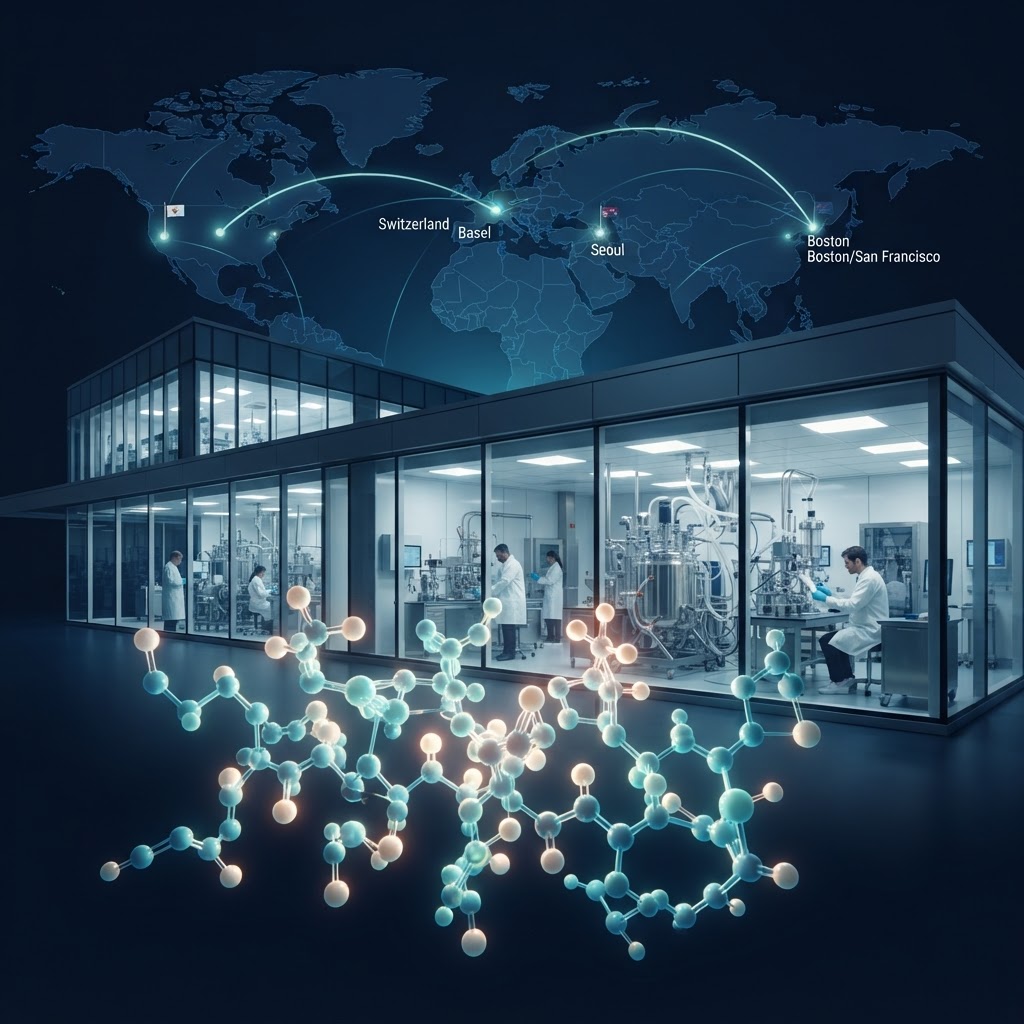
On July 20, 2026, Samsung Biologics launched a $1.8 billion all-cash bid for PolyPeptide Group, a Swiss contract manufacturer specializing in peptide therapeutics. It is the largest acquisition ever by a South Korean biopharmaceutical company.
The deal is a signal, not just a transaction. It tells you where the contract development and manufacturing organization (CDMO) market believes the next wave of drug demand is heading — and how urgently the infrastructure needs to scale to meet it.
The Deal
Samsung Biologics offered CHF 44.31 ($54.65) per share for 100% of PolyPeptide's fully diluted share capital. The price represents a 6.1% premium over PolyPeptide's closing price the Friday before the announcement and roughly 40% above where the stock was trading before market rumors began circulating.
PolyPeptide's board of directors unanimously recommended the offer. The company's largest shareholder, holding approximately 55.65% of outstanding shares, committed to an irrevocable tender undertaking — effectively guaranteeing the deal will close.
The transaction is expected to complete by the end of 2026.
Why Samsung Is Buying
Samsung Biologics built its reputation — and its revenue — on monoclonal antibodies, antibody-drug conjugates, and other large-molecule biologics. Peptides were not part of the portfolio.
But the GLP-1 boom changed the calculus. Drugs like semaglutide and tirzepatide are peptides. The global appetite for weight-loss and diabetes therapies has created a manufacturing bottleneck that CDMOs are scrambling to fill. Peptide synthesis capacity is now a strategic asset.
"We have been pursuing a strategy to expand our portfolio beyond our core antibody CDMO business into high-growth new modalities such as peptides, including GLP-1s," a Samsung Biologics spokesperson said. "Through this acquisition, we aim to immediately secure proven peptide manufacturing capabilities and a solid customer base."
John Rim, CEO of Samsung Biologics, framed the acquisition as both a modality expansion and a geographic play. PolyPeptide operates facilities in California, France, Sweden, Belgium, and India — giving Samsung immediate manufacturing proximity in the U.S., Europe, and South Asia.
What PolyPeptide Brings
PolyPeptide is not a startup. The company traces its roots back more than 70 years in active pharmaceutical ingredient manufacturing. It has produced over 1,000 therapeutic peptides throughout its history.
In 2025, PolyPeptide generated EUR 389.3 million in revenue — approximately $444 million — representing 15.6% year-over-year growth, driven largely by metabolic therapeutics including GLP-1 drugs. The company successfully ramped up a new large-scale solid-phase peptide synthesis (SPPS) facility in Belgium during 2025.
For 2026, PolyPeptide expects revenue growth of 20 to 25 percent. The company is riding the same demand wave that attracted Samsung in the first place.
PolyPeptide's late-stage pipeline of commercial-stage peptide projects gives Samsung immediate revenue opportunities — not just future capacity, but products already generating or nearing commercial sales.
The Broader Peptide Manufacturing Boom
Samsung's deal did not happen in isolation. The same week, Bachem — another Swiss peptide CDMO and one of PolyPeptide's closest competitors — announced plans to invest more than CHF 500 million (approximately $615 million) in a new large-scale peptide production facility in Sisslerfeld, Switzerland. Commercial production at the new site is slated for 2030, supported by a long-term customer supply agreement.
Two of the world's largest peptide CDMOs making near-simultaneous capacity bets tells you something: the industry is pricing in sustained, multi-year demand growth for peptide therapeutics that goes well beyond the current GLP-1 cycle.
The cyclic peptide market alone is projected to reach $3.6 billion in 2026 and grow to $5.3 billion by 2032, according to CAS. Oncology, autoimmune disease, and rare disease applications are expanding the addressable market beyond obesity and diabetes.
The Integration Risk
Not every modality expansion works. Rodney Lax, a former business development manager at PolyPeptide, told C&EN that the deal's long-term value will depend on Samsung's integration strategy. The company could use PolyPeptide to build large-scale GLP-1 manufacturing platforms, leverage its global sites, or keep it largely independent.
Lax pointed to a cautionary precedent. In 2006, Lonza acquired peptide manufacturer UCB Bioproducts. The peptide business, once successful, "withered and failed" within the larger organization before PolyPeptide acquired it a decade later. Scale does not automatically translate to capability when the parent company's core competence lies elsewhere.
Samsung's challenge will be maintaining PolyPeptide's specialized expertise while integrating it into a biologics-centric organization. Peptide synthesis — assembling amino acids one at a time via automated solid-phase synthesis — is a fundamentally different process from cell-based biologics manufacturing. It requires different equipment, different chemistry, and different talent.
Why It Matters
For the CDMO sector, the Samsung-PolyPeptide deal confirms that peptides have crossed from a niche modality into a strategic priority. When the world's largest antibody CDMO pays $1.8 billion to enter the peptide market, it is making a statement about where drug manufacturing is heading.
For the biopharmaceutical industry, the deal signals that peptide manufacturing capacity — not peptide discovery — may be the binding constraint on the next generation of GLP-1 and GLP-1-adjacent therapies. Companies with secured peptide supply chains will have a structural advantage.
And for investors watching the obesity and metabolic disease space, the message is straightforward: the picks-and-shovels play in peptides is accelerating. Samsung just placed a $1.8 billion bet that the gold rush has only started.
Todd Colpron is the Managing Partner of Eliakim Capital, a private investment and strategic advisory firm that manages its own capital while working alongside select family offices and private investors to identify and support exceptional opportunities.
Disclaimer: The information presented in this article is for educational purposes only and does not constitute investment, medical, or legal advice.